





An OCD therapist in San Jose helping adults break free from intrusive thoughts, compulsions, and the exhausting patterns that keep them stuck.

The thoughts keep reappearing. Checking once, twice, three times. The doubt lingers no matter what. What you want is to feel steady, to trust your judgment, to move through the day without constant mental loops dictating everything.
Therapy helps you understand what keeps the cycle going and learn to respond differently when intrusive thoughts show up. Through EMDR and CBT, you build skills to interrupt the patterns and reclaim the space OCD has taken.

OCD therapy may be a good fit if you:
OCD doesn't have to control your life.
OCD shows up differently for different people, but the underlying experience often feels similar. Intrusive thoughts appear without warning, creating immediate anxiety. Compulsions offer temporary relief but reinforce the cycle.

The thoughts appear without warning. You might be thinking about work, relationships, or nothing in particular when suddenly an unwanted thought takes over. Many people dealing with intrusive thoughts also struggle with general anxiety patterns that compound the distress.
Checking once isn’t enough. Neither is twice. You might check the stove, reread emails, or mentally review conversations, looking for mistakes. For some people, these patterns connect to panic attacks and compulsive checking when anxiety spikes.
You ask the same questions multiple times. You retrace your steps mentally, searching for certainty. The reassurance helps briefly, but the doubt creeps back almost immediately.
Touch the wrong surface, and everything feels contaminated. Washing once isn’t enough. You avoid public spaces, certain objects, or anything that might carry germs or illness.
Things need to be arranged in a specific way. Symmetry matters. If something feels “off,” you can’t focus on anything else until it’s corrected.
You love your partner, but intrusive thoughts make you question everything. You analyze your feelings constantly, searching for certainty that you’re in the right relationship.
The thoughts are disturbing and feel completely unlike who you are. You would never act on them, but they show up anyway, creating intense anxiety and shame.
OCD takes time, energy, and mental space. Simple tasks become complicated. Leaving the house, going to work, or spending time with people you care about all require managing intrusive thoughts and compulsions.

I use EMDR and CBT to help you respond differently to intrusive thoughts and build tolerance for uncertainty. These approaches work together to address both the underlying patterns and the current symptoms.
EMDR processes the memories and experiences that reinforce OCD patterns. Many people with OCD have underlying trauma that EMDR can address, reducing the emotional charge that drives compulsions.
CBT helps you understand the connection between thoughts, feelings, and compulsions. You learn practical skills for managing intrusive thoughts when they appear.
OCD feeds on the need for certainty. Therapy helps you accept that complete certainty isn’t possible and that you can function without it.

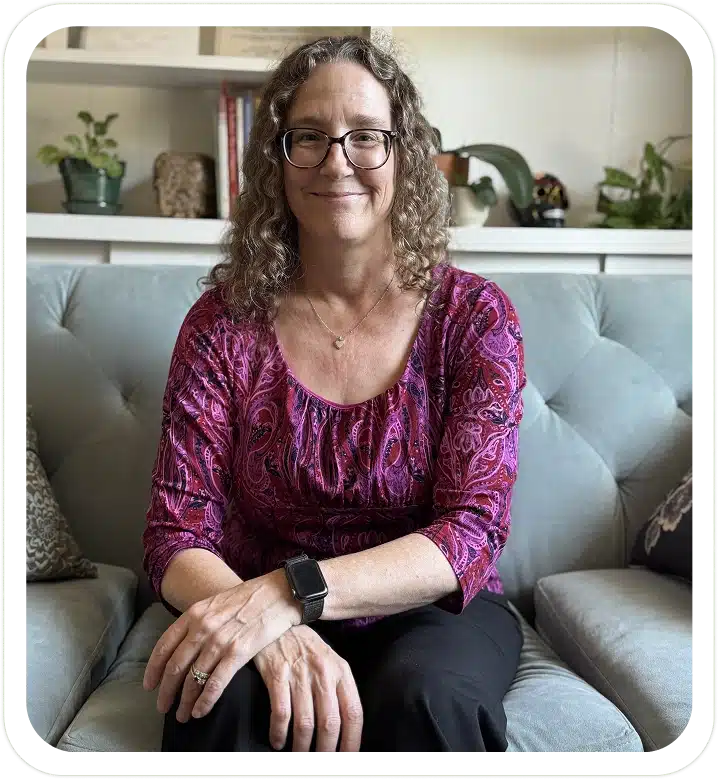
I’m a licensed psychologist with over 25 years of experience helping clients overcome anxiety and OCD using EMDR and CBT. I earned my PhD from Stanford University and my undergraduate degree from Harvard College. I’ve been EMDRIA-certified in EMDR since 2009 and have been in private practice since 2011.
I specialize in working with high-achieving professionals in Silicon Valley who are used to solving problems on their own but are ready for support in breaking OCD patterns.
My approach is practical, focused, and rooted in evidence-based methods that create lasting change. I don’t believe in endless therapy without clear direction. My goal is to help you reach your goals as efficiently as possible.

My office is located at 2020 Forest Avenue, Suite 3, San Jose, California 95128, near Valley Fair and Santana Row. I serve clients throughout the South Bay, including professionals from Silicon Valley, Santa Clara County, and the greater San Jose area.
Both in-person and online appointments are available for California residents, making specialized OCD therapy accessible regardless of your location in the Bay Area.

The initial assessment is 45 minutes. We’ll talk about what brings you to therapy, what patterns you’re noticing, and what you want to change. I’ll ask questions to understand how OCD is affecting your daily life and what approaches might be most helpful.
OCD therapy works by helping you change how you respond to intrusive thoughts and reducing the compulsions that maintain the cycle. The goal isn’t to eliminate all intrusive thoughts, which everyone experiences occasionally, but to reduce their power and frequency while building your ability to tolerate uncertainty.
The OCD Cycle
OCD operates in a predictable pattern that reinforces itself over time.
How EMDR Addresses OCD
EMDR processes the underlying memories and experiences that fuel intrusive thoughts.
How CBT Breaks the Pattern
CBT gives you practical tools to interrupt the cycle in real time.
What Changes Look Like
Progress happens gradually as you build new response patterns.
What causes OCD patterns to develop?
OCD typically develops from a combination of factors rather than a single cause.
These three approaches address OCD differently, though they can work together. Understanding what each does helps clarify which approach might be most helpful for your specific situation.
EMDR for OCD
EMDR processes the root experiences that created OCD patterns.
CBT for OCD
CBT focuses on changing thought patterns and behaviors in the present.
ERP for OCD
Exposure and Response Prevention is a specific type of CBT focused on facing feared situations without performing compulsions.
Why I Use EMDR and CBT Together
I’ve found that combining EMDR with CBT creates more comprehensive change than either approach alone. CBT gives you immediate tools for managing symptoms, while EMDR addresses the deeper patterns that fuel them.
The length of OCD therapy varies significantly based on several factors. Some people see meaningful improvement in a few months, while others benefit from longer-term work.
Factors That Influence Duration
Several elements affect how quickly you’ll see progress.
What Short-Term Work Addresses
Some people accomplish specific goals in 5 to 12 sessions.
What Longer-Term Work Addresses
More comprehensive change typically takes 12 to 18 sessions or longer.
My Approach to Efficiency
I aim to help you make progress as quickly as possible. With 25 years of experience using EMDR and CBT for OCD, I can often help clients achieve meaningful change more efficiently than traditional talk therapy alone. After our initial assessment, I’ll give you a clearer estimate of how many sessions might be needed based on your specific situation.
Yes. Therapy significantly reduces the frequency and intensity of intrusive thoughts for most people with OCD. The key is understanding that intrusive thoughts themselves aren’t the problem; your response to them creates the distress and reinforces the pattern.
Why Intrusive Thoughts Feel So Powerful
Intrusive thoughts gain power through your reaction to them.
How Therapy Reduces Intrusive Thoughts
Treatment addresses both the thoughts themselves and your response to them.
Through EMDR
Through CBT
What Changes Over Time
As you practice new responses, intrusive thoughts naturally decrease.
This is a common fear, but OCD is rarely too severe for therapy to help. In fact, people with significant OCD symptoms often see substantial improvement with the right treatment approach.
Why This Fear Makes Sense
When OCD dominates your daily life, it can feel impossible to change.
What Actually Predicts Success
Severity doesn’t determine whether therapy will help.
How We Approach Severe OCD
Treatment adapts to where you are, not where you think you should be.
When Additional Support Helps
Sometimes medication alongside therapy creates better outcomes.
EMDR helps with OCD by processing the underlying experiences that fuel intrusive thoughts and compulsions. While CBT addresses current symptoms, EMDR targets the root memories and patterns that created the rigid thinking in the first place.
What EMDR Targets in OCD
EMDR processes specific memories that maintain OCD patterns.
How EMDR Processing Works
During EMDR sessions, we identify and reprocess memories connected to your OCD.
Why EMDR Creates Lasting Change
Processing memories at this level shifts patterns that talk therapy often can’t reach.
EMDR Combined with CBT for OCD
I use EMDR alongside CBT because they address different aspects of OCD.
I’m an out-of-network provider for all insurance companies, which means you pay at the time of service and can seek reimbursement from your insurance if you have out-of-network benefits. Many clients find this arrangement works well because it allows for optimal treatment without insurance company restrictions.
How Out-of-Network Benefits Work
If you have a PPO or similar plan, you may have out-of-network mental health coverage.
Checking Your Benefits
You can check your out-of-network benefits before our first session.
Why Private Pay Offers Advantages
Not working directly with insurance companies allows for more effective treatment.
This is one of the most common questions people ask, and the distinction matters because OCD and general anxiety require somewhat different treatment approaches.
Key Differences Between OCD and General Anxiety
While both involve worry and distress, they show up differently.
What OCD Looks Like
What General Anxiety Looks Like
The Overlap Between OCD and Anxiety
Many people experience both OCD and general anxiety simultaneously.
Why Accurate Understanding Matters
Knowing whether your experience is primarily OCD, anxiety, or both shapes the treatment approach.
How We Figure This Out Together
During the initial assessment, we’ll clarify what patterns you’re experiencing.
Identifying OCD symptoms in adults
Adults with OCD often notice these specific patterns in their daily lives.
Finding a therapist who truly understands OCD and uses effective treatment methods can make the difference between struggling for years and making meaningful progress relatively quickly.
What to Look for in an OCD Therapist
Not all therapists have specialized training in treating OCD.
Questions to Ask During Consultations
A brief consultation call helps you determine if a therapist is a good fit.
Finding an OCD therapist near me in San Jose
San Jose and the broader South Bay area have several options for OCD treatment.
Why Specialized Training Matters
OCD requires specific approaches that differ from general therapy.
What Makes My Approach Effective
I’ve used EMDR and CBT for OCD for over 25 years with high-achieving professionals in Silicon Valley.
Scheduling your first OCD therapy consultation
The initial consultation helps you understand what treatment will look like.
Temporary increases in anxiety during OCD treatment are actually common and often a sign that the work is beginning to shift deeper patterns. Understanding why this happens helps you stay the course when treatment feels difficult.
Why Symptoms May Initially Intensify
OCD symptoms can temporarily worsen for several reasons.
How We Navigate Difficult Moments
Treatment adapts to keep you challenged but not overwhelmed.
When Increased Symptoms Signal a Problem
Sometimes worsening symptoms mean we need to adjust the approach.
What Success Actually Looks Like
Progress with OCD rarely follows a straight line upward.
My Commitment to Your Safety
I prioritize your well-being throughout the treatment process.
How family and partners can support OCD recovery
While I work only with individual adults, your support system can play an important role.